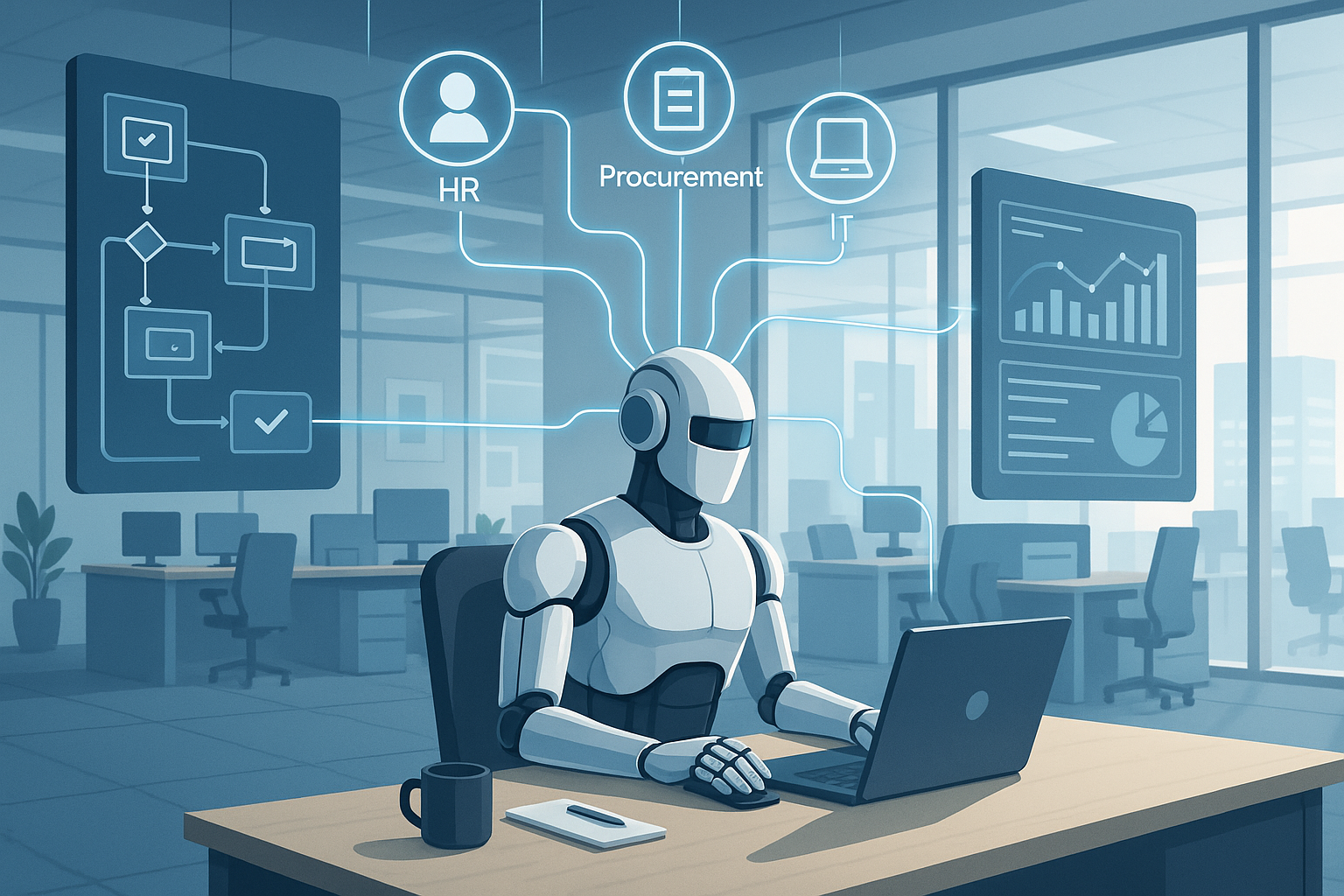
In most enterprises, the loudest innovation conversations revolve around customer experience, personalized chatbots, predictive analytics, and AI copilots for sales. Yet, the biggest untapped efficiency gains often sit much closer to home: in the everyday interactions employees have with HR and IT support.
Every onboarding packet, password reset, and policy clarification consumes hours of support team bandwidth that could otherwise be spent on strategic projects. That’s why enterprises are increasingly exploring AI agents for HR and IT support specialized, conversational systems that can resolve common employee queries, automate onboarding steps, and manage IT requests around the clock.
These AI agents don’t just promise cost savings. They enable HR and IT teams to evolve into strategic enablers rather than being perpetually stuck in “firefighting mode.”
Automating the Employee Lifecycle: A New Era for HR
The employee journey begins long before their first day. The onboarding process, in particular, is a prime example of a task ripe for automation. Traditionally, it’s a paper-heavy, time-consuming series of forms, emails, and meetings. This manual process can lead to delays, errors, and a less-than-ideal first impression for new hires.
Conversational AI agents can completely transform this experience. Imagine a new employee receiving a link to an AI agent portal. This agent, an AI “buddy,” guides them through the entire pre-onboarding checklist:
- Form Completion: The agent can prompt the new hire to fill out tax forms, direct deposit information, and emergency contact details through a conversational interface, eliminating the need for PDFs and manual data entry.
- Policy Education: Instead of a static handbook, the AI can present company policies, codes of conduct, and benefits information in a Q&A format. New hires can ask specific questions like, “What’s the paid time off policy for illness?” and get an instant, accurate answer.
- Task Reminders: The agent can proactively send reminders to complete pending tasks, ensuring a smooth and timely onboarding process.
This automation not only streamlines the process but also provides a superior, more engaging experience for the new employee. For the HR team, this means less time spent on administrative overhead and more time for strategic activities like cultural integration, mentorship programs, and career development planning.
The Self-Service IT Department: Resolving Tickets 24/7
IT support is often seen as a necessary evil, a bottleneck where employees wait for technical assistance. The sheer volume of incoming tickets for common issues like password resets, software installations, and connectivity problems can overwhelm even the most robust IT teams.
Here, AI agents act as a Tier 1 support system, available 24/7. They can handle a significant portion of incoming requests without any human intervention.
- Password Resets: The most common IT support ticket. An AI agent can securely authenticate a user and guide them through a password reset process in seconds.
- Application Troubleshooting: The agent can walk a user through a series of diagnostic steps for a known issue (e.g., “Is the application running in compatibility mode?”).
- Software Access: For new employees or those needing new software, the AI agent can verify their role and automatically provision access to the necessary applications, eliminating the need for a manual IT request.
By offloading these routine tasks, IT professionals are freed up to focus on complex, high-impact issues: network architecture, cybersecurity threats, and system-wide upgrades. This shift elevates the IT department from a reactive helpdesk to a proactive innovation hub.
The Technical Backbone: How It Works
The magic behind these agents isn’t just a simple script. They are powered by a combination of sophisticated technologies:
- Natural Language Processing (NLP) & Understanding (NLU): This is the core engine that allows the AI to interpret and understand human language, including slang, typos, and nuanced queries. A user might say, “My internet’s not working,” and the NLU can infer they’re having a connectivity issue.
- Machine Learning (ML): The agents learn from every interaction. As they process more queries, they become more accurate and efficient at providing the right answers. They can identify patterns in common requests and build a knowledge base that gets smarter over time.
- Integration with Enterprise Systems: This is a crucial element. A truly effective AI agent isn’t an island; it’s deeply integrated with your existing HRIS (Human Resources Information System), ITSM (IT Service Management) tools, and other enterprise software. This integration allows the agent to execute tasks directly like submitting a vacation request to the HR system or creating a new ticket in Jira or ServiceNow for a complex issue it can’t resolve.
- Context Management: The agent maintains a “memory” of the conversation, allowing it to provide a more personalized and coherent experience. If a user asks a follow-up question, the agent can refer back to the previous context.
Conversational AI as the New First Line of Support
Unlike static knowledge bases or outdated intranet portals, conversational AI agents bring natural language understanding (NLU), machine learning, and enterprise integrations into a unified workflow.
Employees don’t need to know where to look. They just ask the agent via Slack, Microsoft Teams, or a web portal and get an instant response. If the issue is too complex, the agent can seamlessly escalate to a human support rep, passing along full context so employees don’t need to repeat themselves.
Key Features That Make AI Agents Effective
- Multilingual Support – Vital for global enterprises.
- Contextual Memory – AI agents recall prior interactions, improving accuracy.
- Integration with HRIS and ITSM Systems – Connect directly to platforms like Workday, ServiceNow, or Okta.
- Continuous Learning – Agents get smarter with every new query and resolution.
AI Agents for HR: Automating the Employee Lifecycle
HR is no longer just a back-office function; it’s central to employee experience. AI agents can automate entire slices of the HR lifecycle:
1. Employee Onboarding
Instead of manual handoffs between HR coordinators, new hires can interact with an AI agent to:
- Complete digital forms.
- Schedule orientation sessions.
- Access curated training content.
- Request equipment and software access.
This creates a seamless “day one” experience while ensuring compliance with documentation requirements.
2. Policy Q&A
AI agents can instantly surface policy answers from a centralized knowledge base. Instead of HR staff drafting the same email reply dozens of times, employees receive consistent, authoritative guidance 24/7.
3. Benefits Navigation
From healthcare enrollment to retirement contributions, employees can ask, “What plans am I eligible for?” or “How do I update my dependent information?” and receive personalized answers.
4. Learning & Development Guidance
AI agents can recommend training modules based on role, career path, or compliance needs, turning professional development into an ongoing, AI-assisted journey.
AI Agents for IT: Faster, Smarter Resolution
In IT, AI agents function as first-tier support—automating the routine while escalating exceptions.
1. Ticket Triage & Resolution
Agents can classify incoming requests, apply solutions from a knowledge base, and even execute fixes automatically (e.g., password resets, software provisioning).
2. Proactive Monitoring
When integrated with ITSM systems, agents can notify users of outages or known issues before tickets pile up.
3. Guided Troubleshooting
Employees can describe a problem in plain language, and the agent can walk them through scripted troubleshooting flows.
4. Secure Access Management
Through integration with identity providers, AI agents can validate employee identity and process access requests automatically reducing bottlenecks without compromising security.
The Technical Backbone: Why AI Agents Are Different
To function effectively at enterprise scale, AI agents require more than a generative language model. They need an architecture designed for reliability, compliance, and performance.
Key Components
- Natural Language Processing (NLP) – For intent detection and context management.
- Knowledge Retrieval (RAG) – AI agents must pull real-time answers from HR/IT knowledge bases, not just static training data.
- Workflow Automation – Integration with APIs and RPA systems allows agents to act (e.g., create tickets, provision accounts).
- Governance Layer – Ensures compliance with labor laws, data privacy, and security policies.
This layered approach ensures employees can trust the answers they receive—and that IT and HR teams maintain full oversight.
Benefits Beyond Cost Savings
While the cost reduction is attractive, the broader enterprise benefits are even more compelling:
- Employee Experience – Fast, consistent support improves satisfaction and retention.
- Strategic Focus – HR and IT professionals can devote more time to projects that move the business forward.
- 24/7 Availability – Particularly valuable for global teams operating across time zones.
- Data-Driven Insights – AI agents can surface trends (e.g., recurring IT issues, common HR questions) to guide policy or infrastructure improvements.
Implementation Considerations for Decision Makers
Before rushing to deploy, leaders should align on a few critical dimensions:
- Scope Definition – Start with high-volume, low-complexity tasks (e.g., password resets, FAQ responses) before expanding to complex workflows.
- Data Governance – Ensure knowledge bases are accurate, version-controlled, and compliant with regulatory requirements.
- Change Management – Employees must be trained to trust and use the AI agent effectively.
- Human Escalation Paths – Agents should be tightly integrated with human support workflows to avoid dead ends.
- Continuous Improvement – Deploy analytics dashboards to monitor accuracy, response times, and user satisfaction.
The Strategic Value: Beyond the Numbers
The business case for implementing AI agents goes beyond mere cost savings. It’s about a fundamental shift in how your organization operates.
- Increased Employee Satisfaction: Instant, 24/7 access to support improves the employee experience. No more waiting on hold or for an email response.
- Scalability: As your business grows, the AI agent scales with you. It can handle an exponential increase in queries without a proportional increase in headcount.
- Data-Driven Insights: Every interaction with the AI agent is a data point. This rich dataset can be analyzed to identify common pain points, anticipate future needs, and improve internal processes. For example, if a large number of employees are asking about a specific benefit, it might indicate a need for clearer communication on that topic.
- Empowering Your Workforce: By automating the mundane, you empower your HR and IT teams to focus on what humans do best: strategic thinking, complex problem-solving, and building relationships. This leads to higher job satisfaction and retention within these critical departments.
The Road to Implementation
Implementing these solutions isn’t a one-size-fits-all process. It requires a thoughtful, strategic approach.
- Pilot Project: Start small. Identify a specific, high-volume area like password resets or new hire onboarding and implement a pilot program.
- Data Collection and Training: The AI agent needs to be trained on your specific policies, procedures, and institutional knowledge. This involves feeding it your company handbooks, IT knowledge bases, and HR FAQs.
- Iterate and Expand: Based on the results of the pilot, refine the agent’s capabilities and gradually expand its scope to other areas of HR and IT support.
The future of internal support is not about a static helpdesk; it’s about a dynamic, intelligent system that anticipates needs and resolves issues autonomously. The time to unlock this internal efficiency is now.
How Punctuations Can Help
At Punctuations, we specialize in building enterprise-grade AI agents that don’t just answer questions, but actively integrate with your systems to automate workflows. Our solutions combine natural language understanding, secure data retrieval, and seamless system integration ensuring that your HR and IT functions scale intelligently without compromising compliance or employee trust.
Whether you’re looking to automate onboarding, resolve IT tickets faster, or create a 24/7 digital HR desk, we can help you design and deploy AI agents tailored to your organization’s unique needs.
Get in touch today and discover how Punctuations can help unlock internal efficiency with AI agents for HR and IT support.